
Is South Africa telling the right BPO story? | Procera CEO
The future of BPO may actually depend on how the world sees South Africa.
Micro Summary
“AI is transforming our industry. But I don’t believe the future of BPO will belong to the country with the cheapest labour. It will belong to the country that creates the deepest human connections. South Africa already has the talent to do that. The bigger question is whether we are doing enough to ensure the world sees it.”
Table of Contents
As Group CEO for Procera, one can imagine that I have sat in a lot of boardrooms over the last few years. And the conversation has a way of going to the same place, eventually.
AI. Every single time.
I’m not surprised by that. The technology is genuinely transformative. The possibilities are real. But somewhere in those conversations, and yes, I’ve noticed this more and more, we’ve started asking the wrong question.
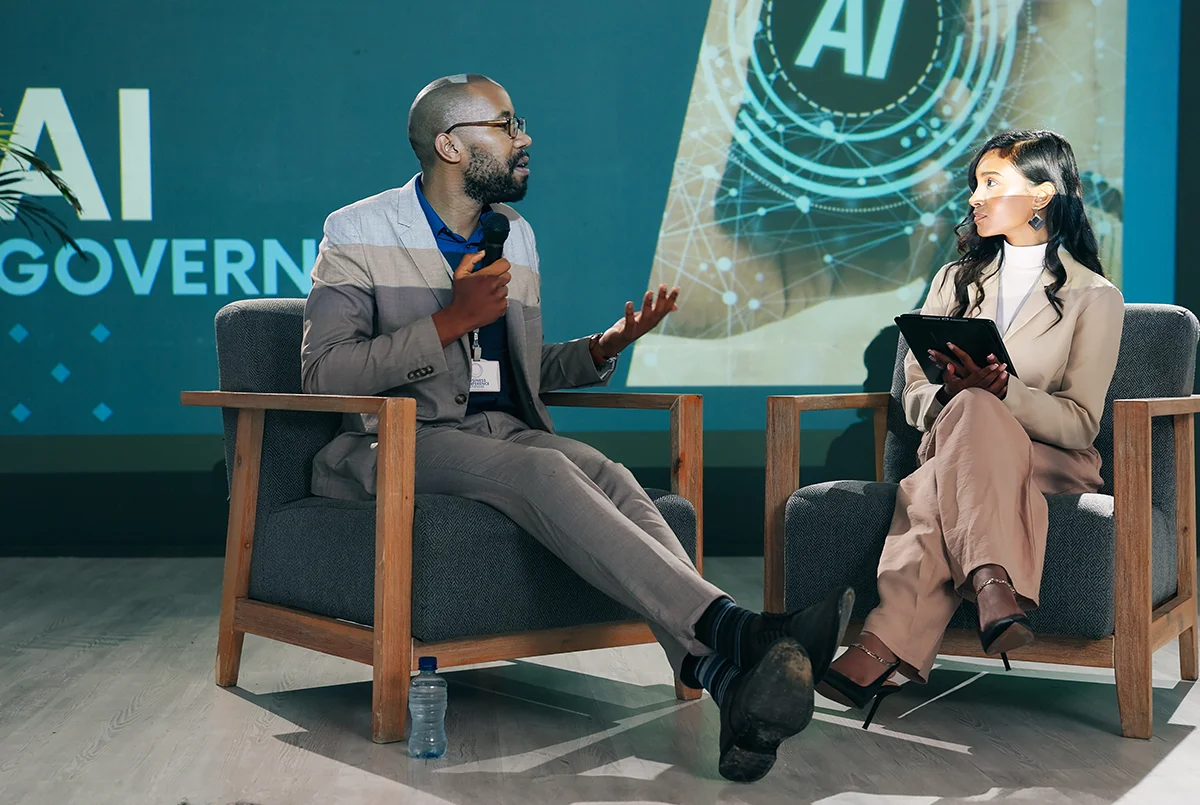
We’ve been asking the wrong question about AI.
The question most organisations are wrestling with is, “How many people can AI replace?”
It’s the wrong frame entirely.
The moment you approach AI purely as a headcount reduction exercise, you have already misunderstood what the technology is for. Every major technological shift in history, from the industrial revolution to the internet, was ultimately about enabling people to do more, not simply about eliminating them.
The better question, the one I’d challenge every business leader to ask their teams, is this: “How can AI help our people become even better at what only people can do?”
And for those of us in the BPO industry, I think there’s now an even bigger question.
If AI makes technology increasingly accessible across markets and destinations, what will genuinely differentiate one outsourcing destination from another?
I don’t believe the future belongs to the country with the cheapest labour.
I believe it belongs to the country that creates the deepest human connections. That presents an extraordinary opportunity for South Africa.
But, it also presents a challenge.
Human connection starts before the conversation.
When we talk about human-centric customer experience, we naturally focus on the interaction itself. The call. The email. The live chat. The moment an agent speaks to a customer. But connection actually begins long before that.
Before a customer speaks to a South African agent, before a global business signs a contract with a South African BPO provider, and before an international executive boards a flight to visit an operation here, they already have a perception of South Africa.
That perception has been built through hundreds of small signals.
Social media posts. News headlines. Business success stories. Political conversations. Sporting moments. Global interactions. Every one of them contributes to the South African brand.
Whether we like it or not, the reputation of our country enters the room before we do. So if trust is one of our greatest competitive advantages as a BPO destination, we need to ask ourselves an uncomfortable question.
“Are we doing enough to challenge outdated, incomplete or misleading perceptions of South Africa?”
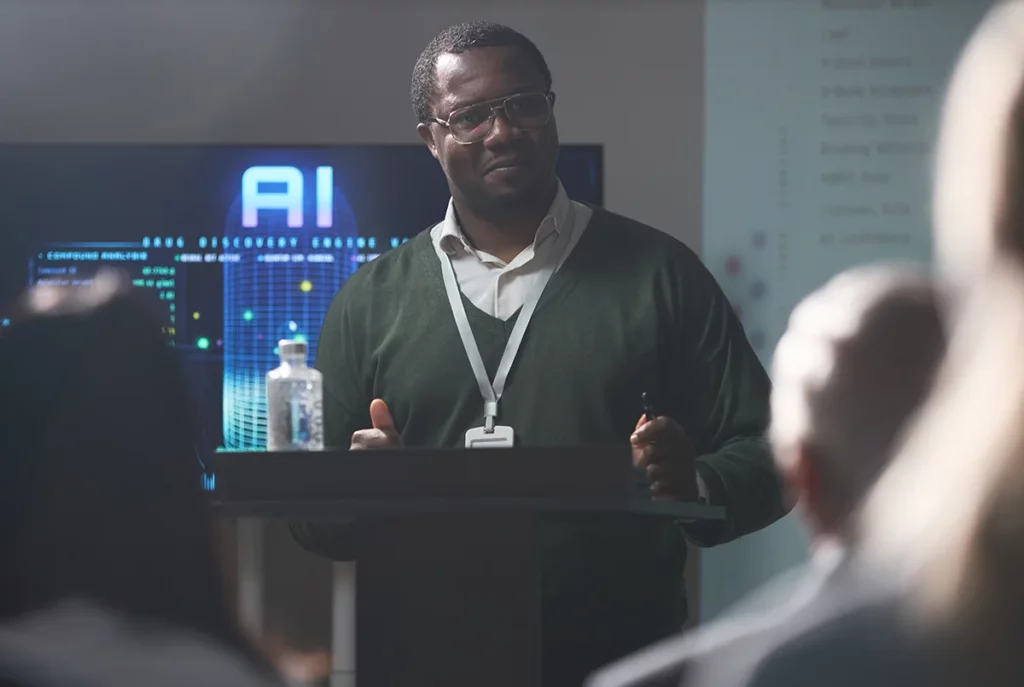
Customers don’t remember algorithms.
I’ve said this many times, but it keeps proving itself true. AI can process millions of data points in seconds. It can automate repetitive work, surface insights, and personalise interactions at a scale no human team could match alone. But it cannot genuinely empathise with a frustrated customer. It cannot reassure someone who is worried. It cannot build the kind of trust that forms during a difficult conversation, the kind that keeps a customer for ten years, not ten months.
According to Zendesk’s 2026 CX Trends Report, 83% of customers believe customer support should be better than it currently is. The gap between technology investment and the best customer experience remains stubbornly wide. That gap is not a technology problem. It’s a people problem.
Or rather, it’s what happens when organisations invest in technology and underinvest in the people working alongside it. For South Africa, I believe that distinction matters enormously. Because human connection is something our BPO industry has spent decades learning how to deliver.
What does the world think when it thinks of South Africa?
This is where I think our industry needs to have a more honest conversation.
For years, the conversation about outsourcing to South Africa was often framed around cost. And cost matters.
But what the best international clients are actually looking for today is something much more specific. They want people who are emotionally intelligent, adaptable, and capable of working fluently alongside sophisticated technology. South Africa has built a genuine reputation for exactly that. Our people communicate with natural warmth. They build relationships instinctively. They bring resilience and cultural fluency that clients across the UK, US and Australia consistently remark on.
When you combine those human qualities with modern AI-driven tools and platforms, you create something that is very difficult to replicate anywhere else.
But those of us who live here, build businesses here and work with South African talent every day see a version of this country that the rest of the world does not always see.
We see innovation.
We see the talent.
We see young people building global careers.
We see South African teams solving complex problems for some of the world’s largest brands. We see resilience, entrepreneurship and world-class service being delivered every single day, and it’s quite something. Something I think the world needs to see, a new time to shine.
The question is whether we are doing enough to make South Africa visible.
Technology creates efficiency. People create relationships.
This is the distinction I keep coming back to. And it’s one I think gets lost in the excitement of new capability. Efficiency is valuable. Nobody argues with that.
Faster resolution times. Lower handling costs. Smarter routing. These are real and meaningful gains. But efficiency is the floor, not the ceiling.
Relationships are what businesses are actually built on.
Customer loyalty, brand trust, the decision to renew a contract or recommend your service to someone else are all relational outcomes. They’re built in human moments. No amount of automation changes that. Ironically, I believe AI is making South Africa more attractive as an outsourcing destination, not less. Because the premium is no longer simply on volume or low-cost repetition.
The premium is increasingly on the kind of human capability that AI can support but never fully replicate.
South Africa’s real competitive advantage.
As AI takes over repetitive, mundane and more administrative tasks, the work left for people becomes more significant in terms of skill versus output. Think about the conversations that require judgement. Serious escalations that need real empathy. The moments where a customer needs to feel that a real person is genuinely invested in their outcome. These are the interactions that shape loyalty.
And they’re exactly what AI isn’t built to handle alone.
So in a very real sense, AI is increasing the level of genuine ingenuity in the role people play, not diminishing it. The agents who remain in customer-facing roles in an AI-augmented operation are handling the most important conversations.
The ones that move the needle on retention, advocacy and, of course, trust.
Research from Capgemini’s 2026 CX report, drawing on insights from 9,500 consumers across 16 countries, points towards human-led, AI-powered engagement as the model closing the gap between customer expectations and actual experience.
Technology scales the operation. People sustain relationships. And I believe South Africa is exceptionally well positioned for that future.
Is reshaping the narrative our responsibility?
This may be the more controversial part of my argument. Should it really be the responsibility of the South African BPO industry to help reshape perceptions of the country? I believe the answer, at least partly, is yes. Not through glossy campaigns that pretend South Africa has no challenges. That’s neither credible nor useful. But through evidence.
Every global client success story matters. Every case study matters. Every South African leader speaking on an international stage matters.
Every story about innovation, employment, technology and talent contributes to a broader picture.
And every interaction between a South African agent and an international customer is, in its own small way, an interaction with South Africa itself.
Businesses export more than services. We export perceptions. Perhaps we have spent too much time competing against one another for individual contracts and not enough time thinking about the category we are collectively building.
Because when an international business chooses South Africa as a BPO destination, the entire industry benefits from that vote of confidence.
And when South Africa is overlooked because of an outdated or incomplete perception, we all lose.
What if our next competitive advantage isn’t another technology investment or a further reduction in operating costs?
What if it’s a united effort to position South Africa as a country of innovation, resilience, talent and world-class service? I think that’s a conversation worth having.
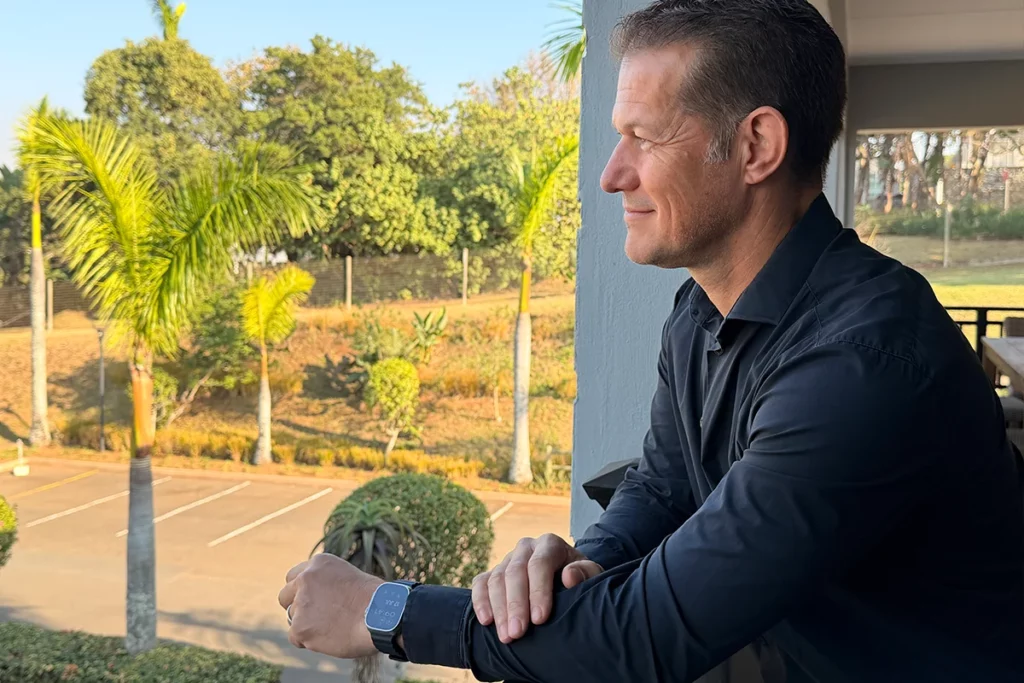
How we think about this at Procera.
At Procera, we’ve never believed this is a choice between people and technology.
That framing is a false dilemma, and I think it leads businesses down the wrong path. The way we see it, technology should remove friction and provide insight. It should improve efficiency by default, by design. People should provide judgement, empathy and trust. Those aren’t competing priorities. They’re complementary ones.
Our goal for our clients and for the teams we build is to create customer experiences where technology handles the routine, so that people can focus on forming genuine connections that outlast the transaction. It’s what we call the Procera advantage, and it’s been the foundation of everything we’ve built over 30 years.
But as a South African business, I also believe we have a role to play in telling the broader story of what this country and its people are capable of. Not because it makes for good marketing.
Because it is commercially important. The businesses choosing their next BPO destination are making a trust decision. And trust is shaped by what people know, what they see and what they believe.
We need to make the proof visible.
One last thought.
The question is no longer whether South Africa can deliver exceptional customer experiences. We already do. The question is whether the world sees the South Africa we know. The innovative South Africa. The resilient South Africa. The talented, ambitious and deeply human South Africa. And if the world doesn’t see it yet, perhaps we need to stop waiting for somebody else to tell that story for us.
Perhaps it’s our responsibility. That’s it for this edition. Until the next one. Andre.
“Technology scales the business. People build the trust. South Africa already has the human capability to lead the next era of BPO. Our challenge is making sure the world sees it.”
– Andre Bezuidenhout, Group CEO, Procera

Frequently asked questions.
Why is human connection becoming more important as BPO adopts AI?
AI is exceptionally good at handling high-volume and repetitive tasks. As those interactions become increasingly automated, human agents are left to manage the conversations requiring judgement, empathy and trust. These are often the interactions that have the greatest impact on customer loyalty and retention.
Why is South Africa well positioned for AI-augmented customer experience?
South Africa has developed a strong BPO talent base built around emotional intelligence, adaptability and cultural fluency. When that human capability is supported by modern AI tooling, businesses can combine efficiency with genuinely human customer experiences.
Does the BPO industry have a role in changing perceptions of South Africa?
The industry cannot control every global perception of South Africa, but it can make the country’s business successes, talent and innovation more visible. Client outcomes, international partnerships and the experiences delivered by South African teams all contribute to the broader reputation of the country as a business destination.